Adolescence and the fuel of online radicalisation
CW: Sexism, Misogyny, Gendered Violence.
Spoilers for the TV show Adolescence.
I’m going to be committing the same sin as the show I’m discussing: Talking about misogyny and misogynistic violence as though it’s something new and interesting. It’s not new, I’m just a man talking about it. Every woman I know has been facing it for a long time and the best way to understand this issue is to talk to women and understand the everyday, pervasive threats to safety that exist where women are being murdered by men roughly once a week.
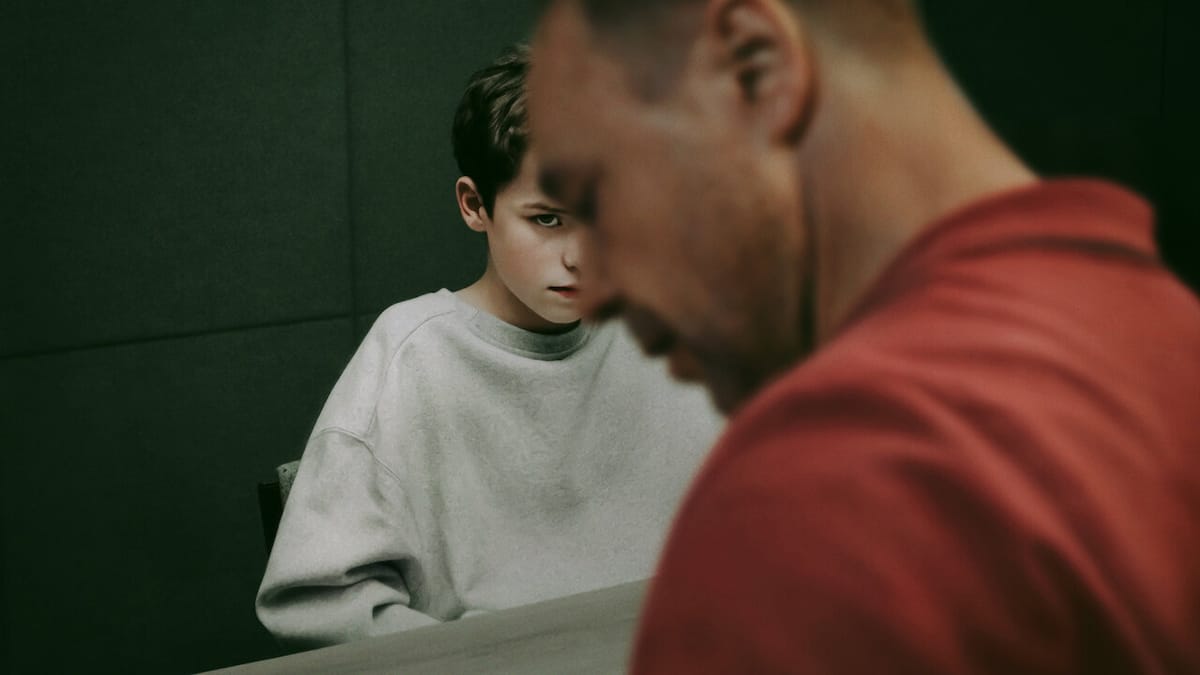
Adolescence is a British four-part miniseries that explores the aftermath of a misogynistically motivated murder committed by Jamie Miller who is (and this is the bit that’s grabbed the attention of the media) a thirteen-year old boy. To the untrained observer, Jamie is a normal kid who goes to school, hangs with friends, does all the normal early teenager shit, but after Jamie murders his classmate Katie it’s revealed that he’s got a deep dark secret:
Jamie has been going on the internet.
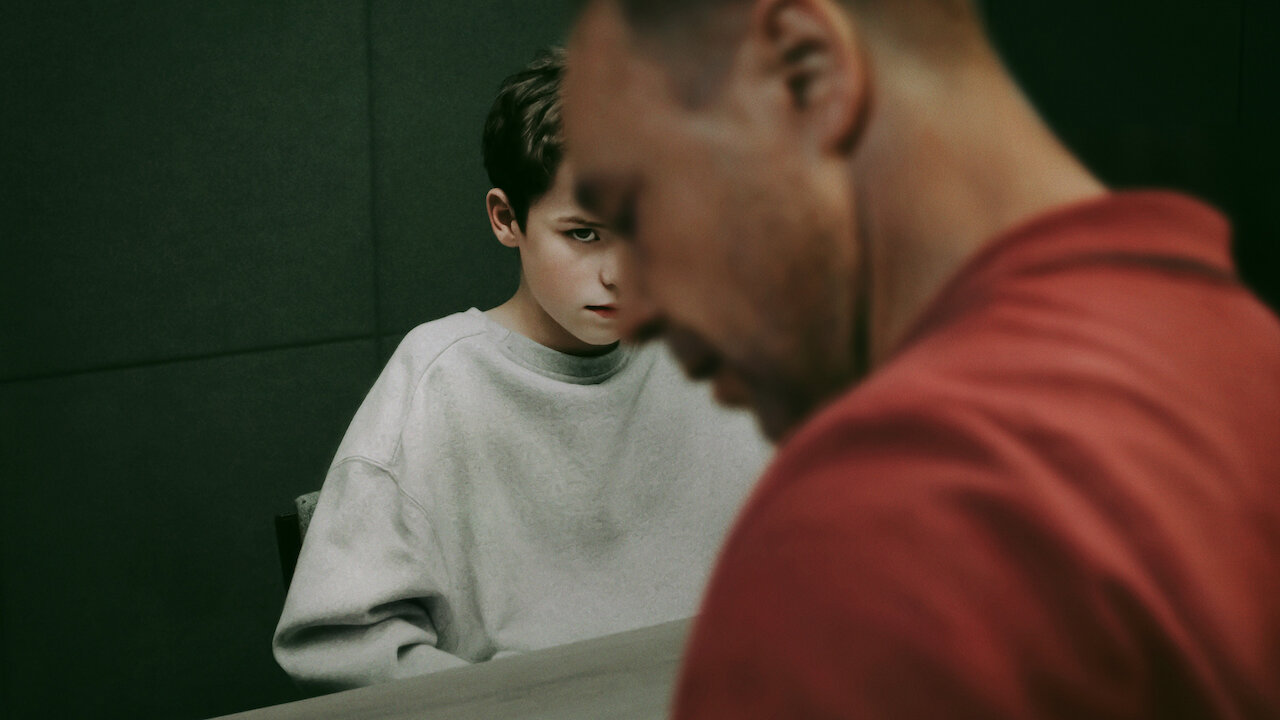
That’s flippant of me, but the show does seem to lay the blame for this murderous teenager’s radicalisation directly at the feet of the internet, manfluencers like Andrew Tate, platforms (specifically Instagram? The show mentions Instagram a lot) and oblivious parenting.
I think that these criticisms are all valid, but I think that the show has necessarily had to flatten its messaging to fit the shape of a drama show. There are moments in the show that betray its ignorance of online culture (such as the coded messages in emoji heart colours) which detract from its message and has the potential to alienate some of the people the show could be most useful in reaching. Likewise, the all-in concentration on the internet as the driver of this kind of violence leaves too much leeway to the kind of offline misogyny that preps would-be Jamies for radicalisation.
So today, I want to talk about the things that I think the show missed. I’ll briefly discuss the mechanics of online radicalisation, but I wanted to talk about other things too. Misogyny takes many forms, after all, and its in the pervasive landscape of the othering of women that we’ll find the kindling with which the online pipelines light their fires. Attitudes to sex work, casual misogyny in the media, absence of women in decision making and social spaces, and the fact that none of this is new and yet it keeps getting worse.
And while I’m going to be using Adolescence as a framing device, keep in mind that while the show is fiction, in Australia a man murdered a woman every five days in 2024.
Every episode of Adolescence is filmed as a oner and more closely resembles a stage play than something typically shot for television. Cameras are attached to drones, handed to people through windows, connected and disconnected from cars and booms and shoved right into people’s faces when big moments hit. This stylistic choice lends the show an atmosphere, an immediacy and presence that makes it all the more harrowing to watch. You are there with the family as they process the fact that their kid son who still hugs a teddy at night has killed a girl because she rejected him. It is unbelievably effective, especially in the third episode, where a psychologist interviews Jamie and you watch him treat her like a game animal for almost an hour. She has a nervous breakdown as soon as he’s out of sight, and the camera stares on unflinchingly.
And the acting really brings it home. Owen Cooper is disgustingly good as Jamie, and he’s supported a brilliant cast. Notably, co-creator Stephen Graham as a put-upon but kindly dad and Erin Doherty as psychologist Briony are really putting in the work as they and the whole cast struggle to understand how this possibly could have happened.
How this could possibly have happened.
Online radicalisation has been a thing for a while but to watch Adolescence you would be forgiven in thinking that merely going on the information superhighway in your room is enough to turn a young boy into a ravening murderer, which is obviously not the case. This article is on the internet, after all, and I’m not trying to advocate for anything except fully automated luxury gay space communism.
No, radicalisation has become stochastic and decentralised on the internet, but there are noticeable, predictable behaviors and demography that make people more susceptible to it. Being a bit of a nerd is one, as is undergoing social upheaval, as is being a white male between the ages of 18 and 35. Any perceived sense of oppression, of threat of becoming the minority, or even of being seen as lesser than other members of a group you identify with makes young men susceptible to this process.
The manfluencer sphere is a major part of this pipeline, and finds shelter in the big tent that modern online hate ideology is more than willing to provide. Andrew Tate is mentioned by name in the show; he’s one of the latest and highest profile examples but hardly the only one. Neil Strauss’s The Game predates social media as we know it and since then there have been a string of men willing to write books that teach other men how to treat women like animals you need to trick into sex. You don’t have to look very far to find the idea that women are enigmatic creatures who will mock and belittle you and that to fulfil your role as a man you must coerce them into subservience.
It’s not just the people doing explicit pick-up artistry or self identifying misogynists that lead to this kind of radicalisation, either. A whole tranche of influencers feed into this implicitly even if their work only touches on the roles of men and women tangentially. Everything from outdated but (I suppose) fundamentally goodhearted ideas about chivalry to moronic claims that women are pissing out estrogen from the pill and “feminising” men through drinking water abound out of the mouths of these sorts of people. Sure, they hide it behind beard stroking and confidence, but it’s misogyny 101 and a primer for more extreme ideas.
And while we’re talking about extreme ideas, the platforms that host this content are as much to blame as anyone else. It’s documented elsewhere that content algorithms reliably send people to more and more extreme content in an attempt to keep them on-platform, and the combination of cowardice and avarice of people like Mark Zuckerberg have built these mechanisms from the ground up on purpose.
I’ve left a few links to some of my favourite video essays that discuss online radicalisation in different ways down the bottom. They’re long, but very worthwhile because they discuss the mechanics of the process that is only hinted at in Adolescence. In particular, check out How to Radicalise a Normie because it covers this idea in great depth. It’s talking about recruitment to the alt-right but the process for extreme online misogyny has a startling level of overlap.
If there is one thing I want you to understand as I talk about the rest of the things in this article, it’s how online hate proliferates and grows. The mechanisms of radicalisation identify, isolate, encourage, agitate and reward more and more extreme behavior, until the subjects are filled with impotent and all consuming rage while surrounded by people telling stories of how great it is to take that anger out on the group they blame.
Young men and boys fall down this rabbit hole easily, and it’s extremely dangerous, but it doesn’t happen on its own. Offline, misogyny runs wild, and it doesn’t take much to see it in action.
LinkedIn Deep Thoughts
After watching the show, I started noting some commentary on it. News articles talking about how to reach young boys, the dangers of social media, all the usual stuff. However, when I logged on to LinkedIn I beheld the addled thoughts of a man with a brain so smooth I hope that it’s submitted for scientific study when he’s shuffled off this mortal coil.
Here’s the commentary:
“🧠 Everyone’s talking about the Netflix documentary (Editor’s note: Not a documentary) Adolescence — and rightly so.
It shines a spotlight on the disturbing rise of online influencers like Andrew Tate and how their content is shaping the attitudes of young boys, especially around masculinity, control, and misogyny.
But here’s the other side of the conversation we must have…
📲 What about our girls?
Lily Phillips recently revealed she slept with 101 men in one day as part of a filmed “adult content” stunt—and has even stated she wants to go for 1,000.
Bonnie Blue claimed to have slept with over 1,000 men in 24 hours, citing it as part of her own adult entertainment legacy.
🚨 These aren't isolated acts—they’re now part of a wider, viral digital landscape that young women are watching, absorbing, and navigating daily.”
What about our girls? Is he serious? What blame could the girls possibly have?
Flabbergasted, I headed to the comments section. Surely, a take constructed from this much raw idiocy would have drawn the ire of the great minds of the world’s foremost professional network?
But no. Many of the comments were praising the guy for his raw and thoughtful insights about the state of the world.
I was, to borrow a phrase that the kids probably aren’t using any more, shook.
There were hundreds of comments and thousands of reactions, and most of them were praising the smoothbrain on its eggshell-like sheen. Heaps of them saying “wow, this is a reasonable and thoughtful way to compare these two things”. It wasn’t like this was a single post by a weirdo that was being ignored, either. I’d be pretty confident in saying that this single LinkedIn post has had more views than the entirety of this Substack.
I couldn’t believe it. Something was so fundamentally broken in their conception of the world and their moral code that they seriously thought that fucking someone was as morally reprehensible as murdering them.
Now, I’m not going to pretend that the sex work industry is some glorious utopia. That would be naive. However, our mate wasn’t getting into the ethics of sex work, working conditions or the way sex work is so often a microcosm of the hellscape that capitalism creates. No, none of that nuance. Instead he was holding up “Murder committed by men” on one placard and “Women earning money for lots of sex” on the other, and saying “They’re the same picture”.
If he was genuinely concerned about the extreme sex acts sex workers are engaging in for views (not an unwarranted concern, I’d say, but I’d lay that at the feet of the way recommendation algorithms and media work and not at the morality of the women in question) then there was no need to draw the comparison to Adolescence. There isn’t a moral equivalency between sex (in any volume!) and murder.
But even if it is true that sex work is immoral or women should have less bodily autonomy than men for whatever bonkers-ass pants-on-head stupid reason you care to concoct, surely that immorality is less severe than killing? Like, I can’t believe I have to say this but engaging in consensual sex for commercial purposes is not as morally bad as murdering a person.
Or maybe it’s the other way around. That sex work isn’t that bad, but neither is killing a woman.
The thing is, the more you look around the more you realise how societal misogyny treats women as objects. Objects for entertainment, for mockery, for scorn, or just to ignore.
MAFS, or women-hating as entertainment
The flood of dating shows that have inundated commercial television is something that I hope we look back on societally and hang our head in shame about. For the most part they’re merely insipid, overproduced garbage filled with heteronormative bullshit, but MAFS is a special case.
Married at First Sight is a dating show that’s in its twelfth season in Australia, and I couldn’t tell you the format of the show. Two sets of bogans, one male and one female, get piss drunk in front of cameras and say embarrassing shit. I don’t know and I don’t care. It brings in the ratings because hey, put a bunch of desperate and volatile people in a room together and you don’t have to employ a script writer because they’ll fight with one another!
I used to have a housemate who would watch all of these shows, and I remember sitting down with her and watching an episode of MAFS a few years back. I had to leave halfway through because one of the women (it was the 2019 season, I can’t remember exactly who) was clearly having a complete emotional meltdown. Instead of, I don’t know, ending the situation and checking she was okay, the show contented itself with continuing to shove the camera in her face while her male contemporary yelled at her that she was being crazy.
It was distressing to watch.
Recently, the show has made waves because it turns out that one of the myriad near-cloned dipshits they bring in punched a wall in a heated moment with his colleague (I’m not going to say partner or wife, that lends the whole conceit of the show an unearned air of matrimonial legitimacy) while off camera.
Did the production company separate him from her? Did they kick him off the show? Did they pull his content from the show entirely?
No, none of that. As a matter of fact, he got his own victim-blamey segment, complete with mournful music, where he apologises for “just losing control”. Somehow, despite this lack of control, he was able to coerce his entire body to move in concert with enough force to break plasterboard. Funny, that.
The “relationship experts” rather than seeing these actions as the factory full of red flags that they so clearly is, admonished him for “intimidating behavior” and stuck a title card up saying that domestic violence is bad. Which rings hollow considering they still aired a discussion of the incident and apparently didn’t take steps to ensure his colleague’s safety. In other words the ratings of the show took precedence over the safety of the women in its employ.
This incident is now being investigated by the police and fair work and a heap of other people, but the point remains that if this show had any spine or morals they would have kicked that guy’s ass so hard that his nose bled and then sent him onto the street with a sandwich board.
As it turns out, nearly two million people (in a country of only twenty-six or so million) tune in to this garbage, so again I find myself on the outer. Apparently, it’s very normal to think that a woman’s safety at work is secondary to the entertainment value of a man having a tantrum. But I suppose we just let dudes on TV and radio say anything, don’t we?
Marty Sheargold is a Flog
For those of my audience not in Australia, Marty Sheargold is an actor and radio host in Melbourne, Australia. He got fired recently because he was a sexist shithead, but only after a gigantic public backlash to the remarks. If certain influential women like Hannah Ferguson of Cheek Media hadn’t started the ball rolling I’m certain that, similarly to MAFS, the radio network would have been content to let him yap.
To recap, when talking about the Matilda’s (Australia’s women’s soccer team, who rose to prominence during an amazing world cup campaign in 2023) admittedly dire performance in the Asia cup, Marty made a pig of himself with comments such as:
“I’d rather hammer a nail through my penis than watch.”
“They remind me of a bunch of year ten girls with friendship issues.”
“What do they believe in? It’d better be men.”
“Got any men’s sport?”
Just a reminder that we are talking about a professional sporting team who had a bad series. The fact that they hadn’t had a head coach for more than eight months (which is absolutely going to affect team performance) apparently didn’t bear mentioning by Mr Sheargold. No, comparing them to teenagers and threatening to commit acts of violence against his own genitalia was the depth of commentary this man thought a team of professional athletes merited.
The fact that he was comfortable enough on a nationally syndicated radio station to say things like this (it was also not his first time making misogynist comments, I’m sure you’ll be surprised to know) is revealing not only of Sheargold but of broader cultural norms.
Too often this is dismissed as “locker room talk”, and I think the term is instructive. This rearing of misogynistic othering in the media is just the visible head of the hydra of misogyny that occurs in male spaces all around the country. In locker rooms, true, but also in manufactured male-only spaces, which I’ll talk about in a bit. When men get together on their own, this kind of dismissal of women’s achievement is unbearably common. I have witnessed conversations in which men have claimed they would be able to beat women’s basketballers or tennis players. In one instance, a dude was convinced that with three months training he could be competitive in the women’s 200m sprint. I’m not sure if he considered the five cigarettes I’d watched him suck down as performance enhancements or whether he thought he’d cut down his PB after a seventh pint. Needless to say, I doubted his claim.
I sometimes hear the refrain “oh it should be kept in the locker room and not aired in public”. And that’s nonsense. I never hear the same level of vitriol levelled at men for their mere existence in a space as I do for women. I see individual men called out for a lack of performance or perceived personality flaws. I see men idolise or vilify other individual men for their skills, or talk about the lack of performance of a team, but the ire isn’t levelled at the legitimacy of the form of the sport as a conceptual unit. When women are discussed, it’s women’s lack of skill or performance as a whole that is the topic of discussion. Women in sport is still too often seen as both setup and punchline.
If we’re going to be serious about people like Sheargold, we need to realise that it’s the tip of the iceberg. Men have a fundamental respect problem where if a woman is doing a sport it’s seen as less impressive, less important, less worthy of praise or adulation or money than if a man does it. That starts in the locker room. It starts in the men’s only spaces, it starts on the boy’s trips and then it bubbles and boils over until it reaches national radio and only then is anything said to stop it.
This dismissal of women’s achievements as rote is ridiculous but get a bunch of dudes in a room and it happens way too often. Part of the problem, of course, is that men have perfected the art of keeping women out of rooms where conversations happen.
33/35 men in the room
When I first moved to Melbourne, I was working as a graduate in an architecture firm. I hadn’t experienced work in a large office before and was doing the classic “little kid in a big town” working hard to get enough to keep a roof over my head. For one project, there were a series of regulation changes that the developer was keen to get ahead of, so we had a huge crunch to get the building design to council before the deadline. As a reward, the design team got taken out to a very fancy seven course dinner in a dimly lit private room. Fifteen of us, all men, which at the time I didn’t really clock to or think about, until the developer proposed a toast. It started with a general thank you for the hard work but was soundly rounded out with:
“and can I just add that it’s nice just blokes in the room so we don’t have to worry too much about what we say.”
Just boys being boys, free to say what they wanted without the nagging inconvenience of having to consider what a woman would say if she bore witness to the debauchery. I don’t even recall anything of the content of the rest of the night’s conversations, but I am to this day flabbergasted at the idea that the lack of women was not only enough to comment on, but to see as positive and to toast as aspirational.
After that I started to take note of things and continued to do so through the next several companies I worked at. When I was in a meeting, I took a note of the gender split. At one point I had this in a spreadsheet but I lost track of where I saved it, but the general breakdown was this. This is all anecdotal obviously based on my decade or so in the architecture and design industry, but I’d be very interested to hear others’ opinions.
- Gender diversity was at its highest when meetings were work related: workshops and problem solving, nitty gritty decision making work. I think it still trended slightly male sided but within a 45-55% split.
- Project managers in architecture and environments were usually male to the tune of about 70%.
- Senior leadership is overwhelmingly male.
- When in meetings that have some kind of cache, like kick off meetings, topping out meetings or similar milestones, the gender ratio was more strongly male.
The most egregious one I noticed was at a joint party for a bunch of firms that had been bought out by a multinational conglomerate. Suddenly instead of three firms doing vastly different things, we were Sister Companies(tm) with a shared goal and mandate to drive the future!
To mark this most auspicious occasion, we had a very fine dinner followed by a karaoke night. Expenses laid on by the company, many bottles of nice wine, great food, the works.
I was a last minute invite as someone in my company was pulled away to more urgent matters. I wasn’t senior enough to get the invite in the first place, which is fair, but when I got there I realised that this celebration of three companies (all of whom had robust Diversity, Equity and Inclusion policies) had only two women in attendance.
Out of thirty-five people.
Walk down the street and see if there’s any time when there are thirty-five people around and you’re looking at that ratio of gender disparity. I’ll wait.
So the work is for everyone, and in that sphere it’s very important to have diversity, but as soon as it’s time to celebrate, I was again in the top room of that pub. Ten years separated these events, and the only difference was that the lack of women wasn’t mentioned until the following week rather than in the room on the night.
Are the men in those rooms the men that kill there wives and partners? I don’t know. The vast majority of them probably aren’t, but I can’t shake the feeling that its the same brand of dismissiveness. The same glee at being rid of “the girls” for a while, the same mockery of women’s sport, the same demonising of sex, the same willingness to put women in harm’s way for entertainment that provides the ground for more extreme hatred to grow.
The Kindling Problem
I’ve had it in my mind to write about misogyny for a while. The disgusting amount of male violence in my country last year had me feeling sick but I had no idea what to do with the anger. All too often it turns into a deep sigh and a vast feeling of what are we even doing here? when you open a website and see that yet another woman has been beaten or stabbed or strangled by one of the men in her life. The fact that so many men are capable of such cruelty staggers me, and I can’t help but think of what it must be like to be one of those women. In her final moments, does she see that man, the one she knew and trusted? Does she look at him while he wields a knife or a bat or even just his fists as he moves to end her life and think what could I possibly have done to deserve this?
The answer is nothing. There is nothing that any person can possibly do that would warrant murder.
I’m glad that Adolescence exists. I’m glad the conversation is still happening and that it’s ongoing and I think that we need to be wary of online radicalisation. But I think the risk of a show like Adolescence is that the argument gets flattened and suddenly the only thing we’re talking about is online radicalisation.
Online radicalisation is a problem, I’m absolutely not going to deny it. It’s a pervasive invasion of thought by influencers, message boards, isolating processes, and rampant algorithms. It’s absolutely terrifying but it doesn’t operate in isolation. But it doesn’t work well in environments where a healthy respect for the groups being othered don’t exist, and we ignore the broader context to our peril.
The world around us is littered with misogyny. It’s in our professional networks, masquerading as thought pieces drawing moral equivalencies between violence by men and sex by women. It’s on our TVs, where women are placed in emotional and physical distress and in harm’s way for the sake of maximising advertising revenue. It’s on the radio, where shock jocks are able to mock professional athletes simply because they are women. It’s women in workplaces being excluded from social occasions. It’s the constant, unending procession of lack of consideration of women.
It’s been around for a long time. It’s been commented on for a long time. What’s new is the introduction of a widespread, easily accessible pipeline where women are dehumanised beyond the point of no return. Where, like Jamie in Adolescence, young men stop being able to understand women’s deaths as the extinguishing of a human life. We need to curtail the ability for young men to find these online spaces, true, but we also need desperately to work on what happens in meatspace.
Everywhere you turn, there are these slight dehumanisations, these slight indicators and context clues telling so many men that women are less worthy of praise and love and consideration and interaction and friendship than they should be. These ideas form the twigs and leaves and detritus that litters the ground around us, and if this is the environment a boy is already in, he’s going to be far more susceptible to the flames of online radicalism.
Thanks for reading. I’m not going to ask for donations on this one because it doesn’t feel right, but if this resonated with you then feel free to share it with someone you think would benefit from reading it.
Links to youtube videos about online radicalisation and the responsibility of platforms: