Melbourne Design Week
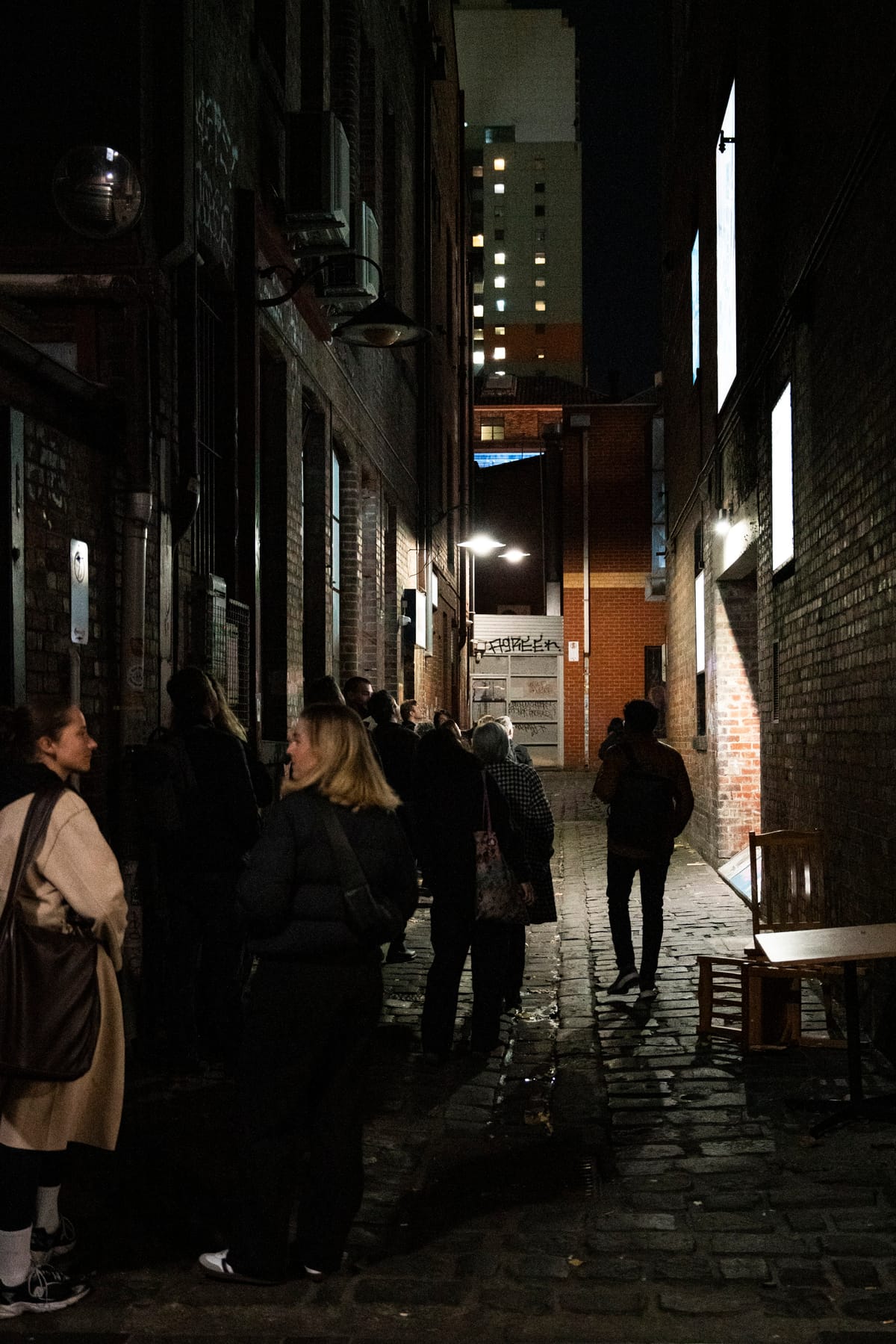
Apparently I’ve reached the point in my career where people think it’s a sensible idea to invite me out in front of a crowd to give my opinions about a thing.
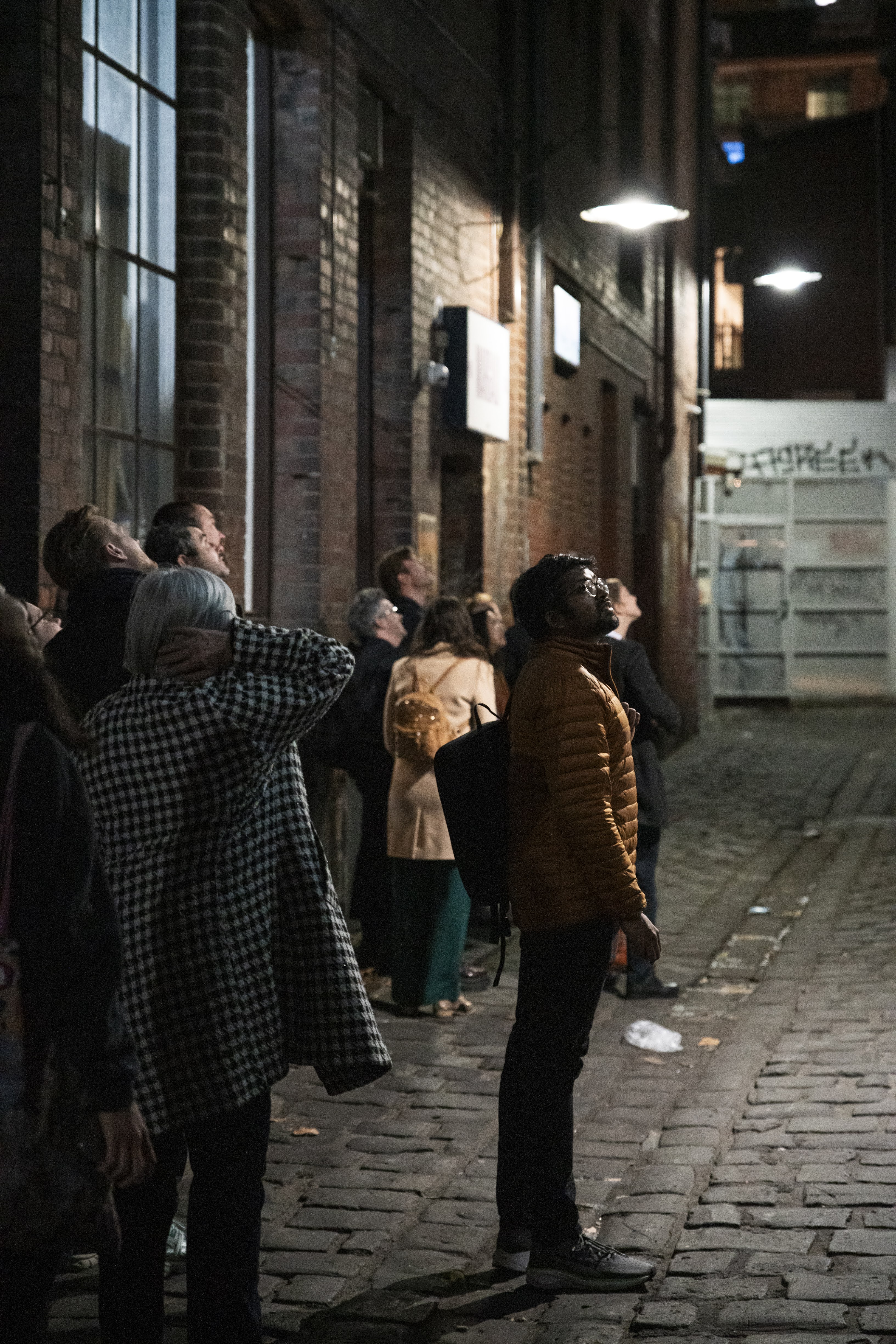
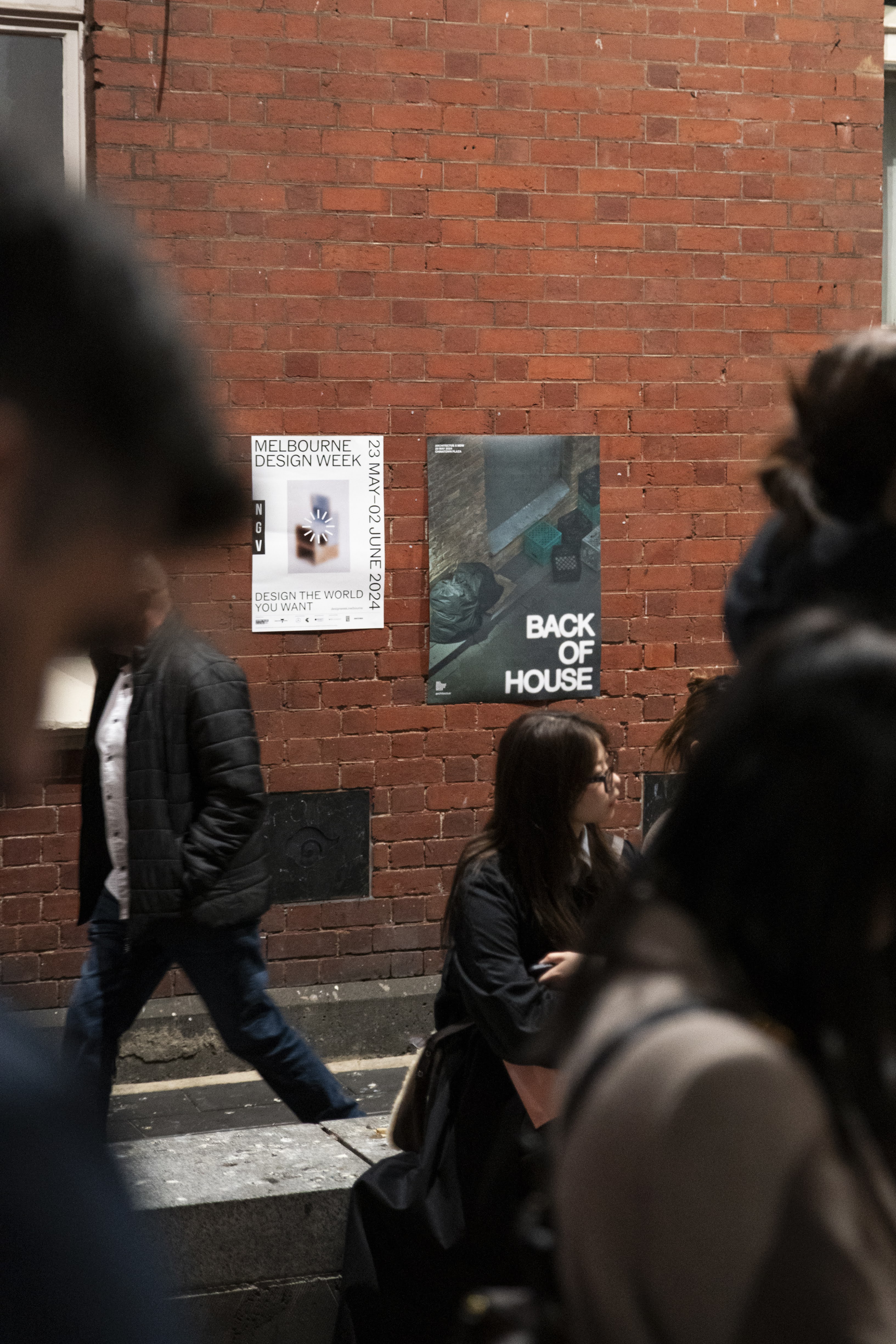
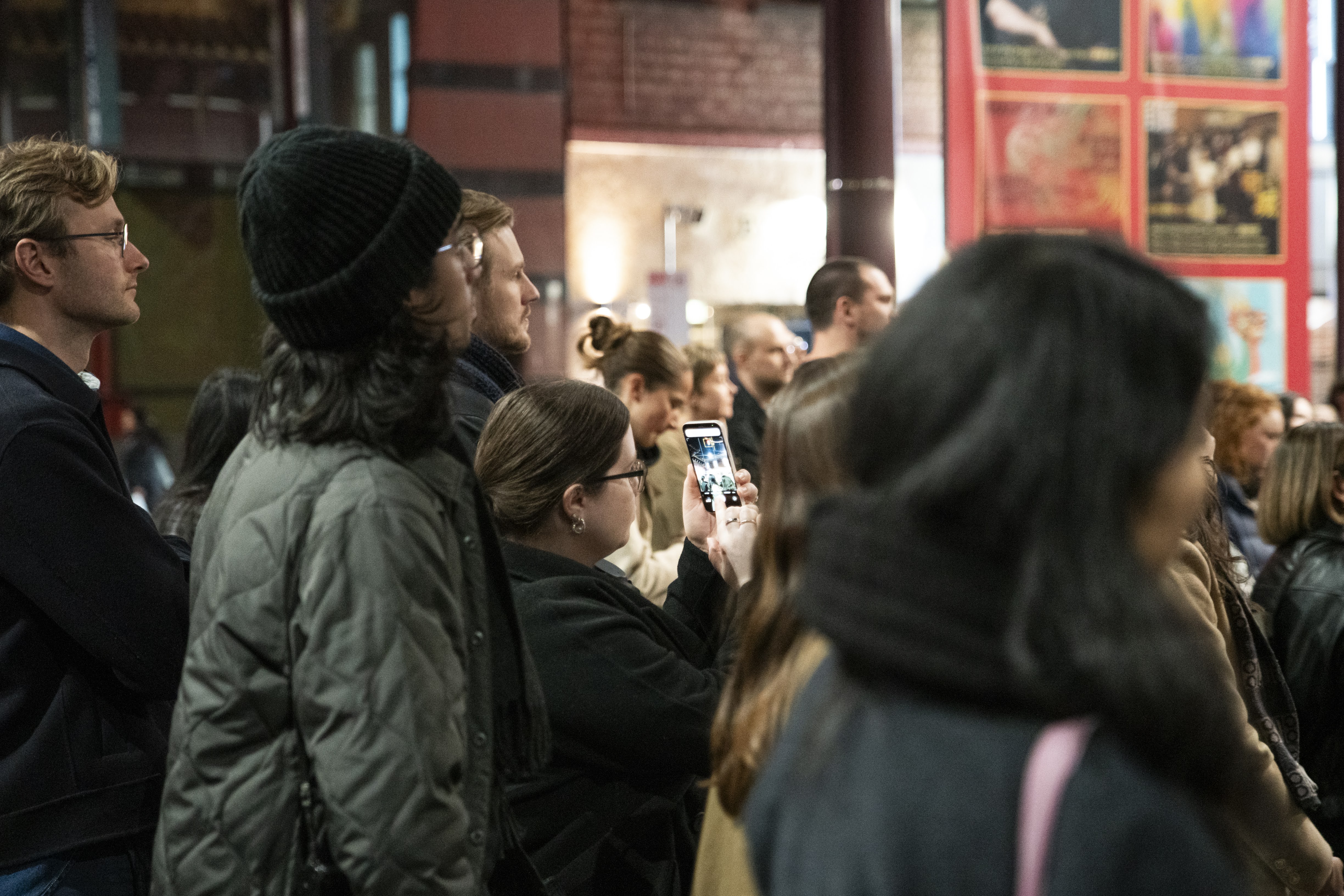
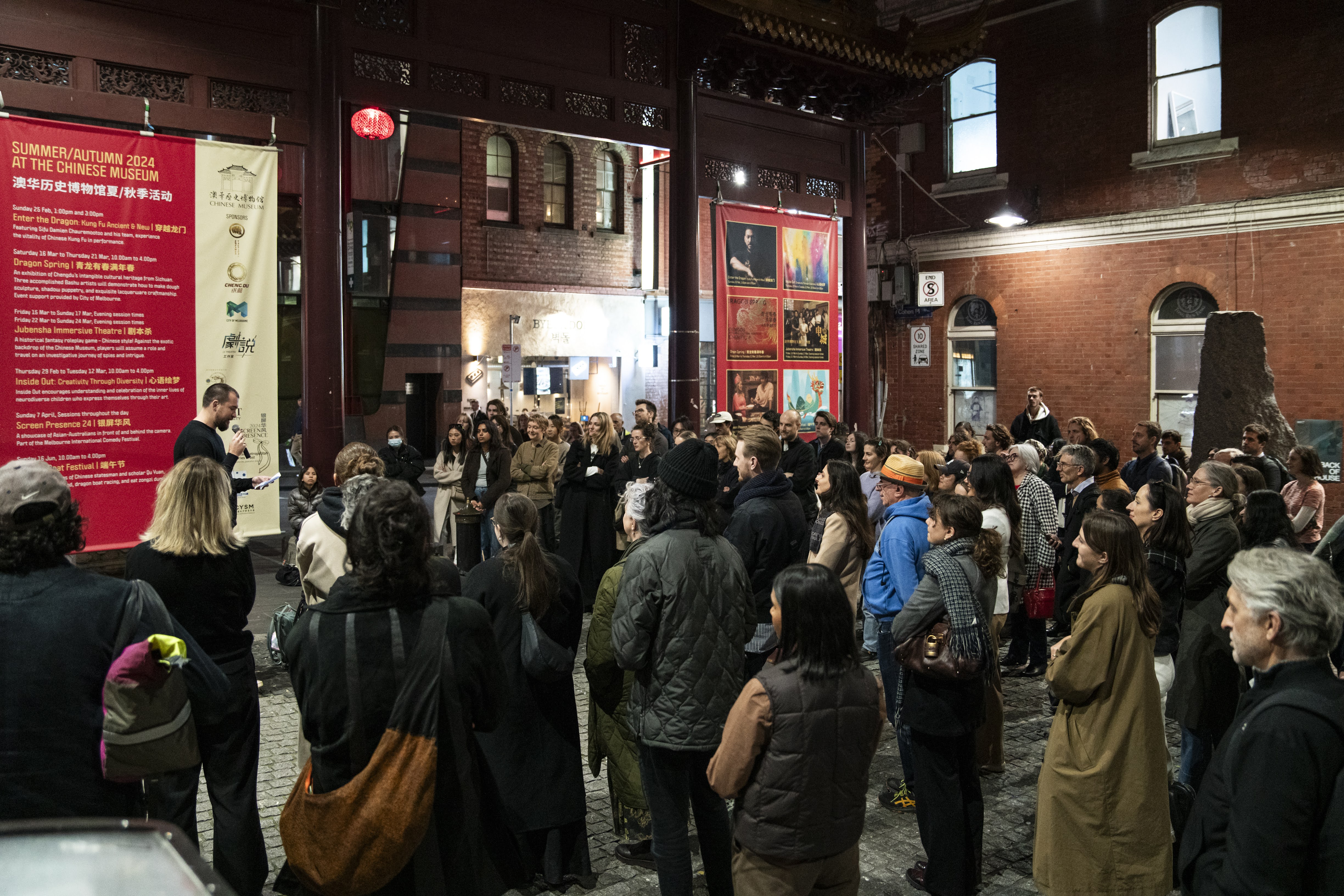
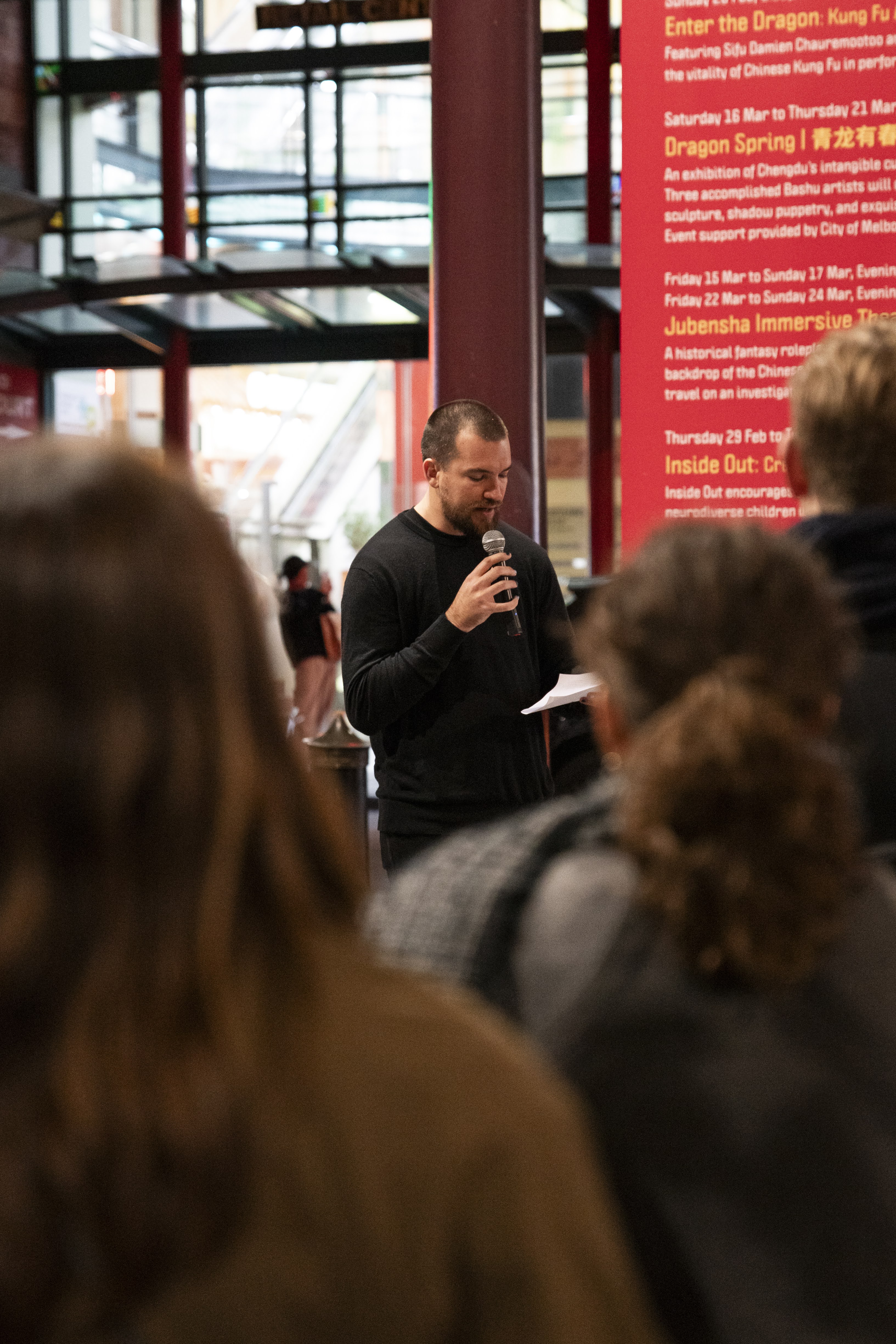
That’s right, ya boi gave a speech at Melbourne Design Week, where the topic was “Ethics, Energy and Ecology”. I spoke at an event called “Back of House” with a number of other people from industry.
It’s also the first time I’ve been invited to speak at an event as an author, so I think that’s some kind of milestone. Go me.
My day job being environmental design, there’s a lot of crossover with the kind of things I read about, write about, and care about. The term we in the biz use for the societal frameworks that allow people to prosper and grow, or to falter and fail, is “social sustainability”, and I think it’s an underlying theme in a lot of my writing. Sunward Sky is about an oppressive social structure and what it takes to do good in that sphere. Eleanor’s mind is about the unintended consequences of earnestly trying to do good. and Spice Trader is about emancipating yourself from self-destruction, and how hard that is to do. I thought that would be a good place to start my exploration, to concentrate on the ethics of what a back of house space would or could be.
Recently, I’ve been a little obsessed with the idea of ownership. More specifically, I have thought about occupation and ownership. In a country (Australia, though I get the impression it’s not localised to here) that’s facing a housing crisis, and with a genocide occurring overseas, there are people who “Own” land who are causing misery to those who “Occupy” it.
In the West, in Capitalism, as a result of the enclosure movement of the 17th and 18th century, we favour the rights of the owner over the occupier. However, it’s always, always the occupier who gives character, life and meaning to a space.
To that end, I present the short story I wrote and presented at Melbourne Design Week.
Back of House
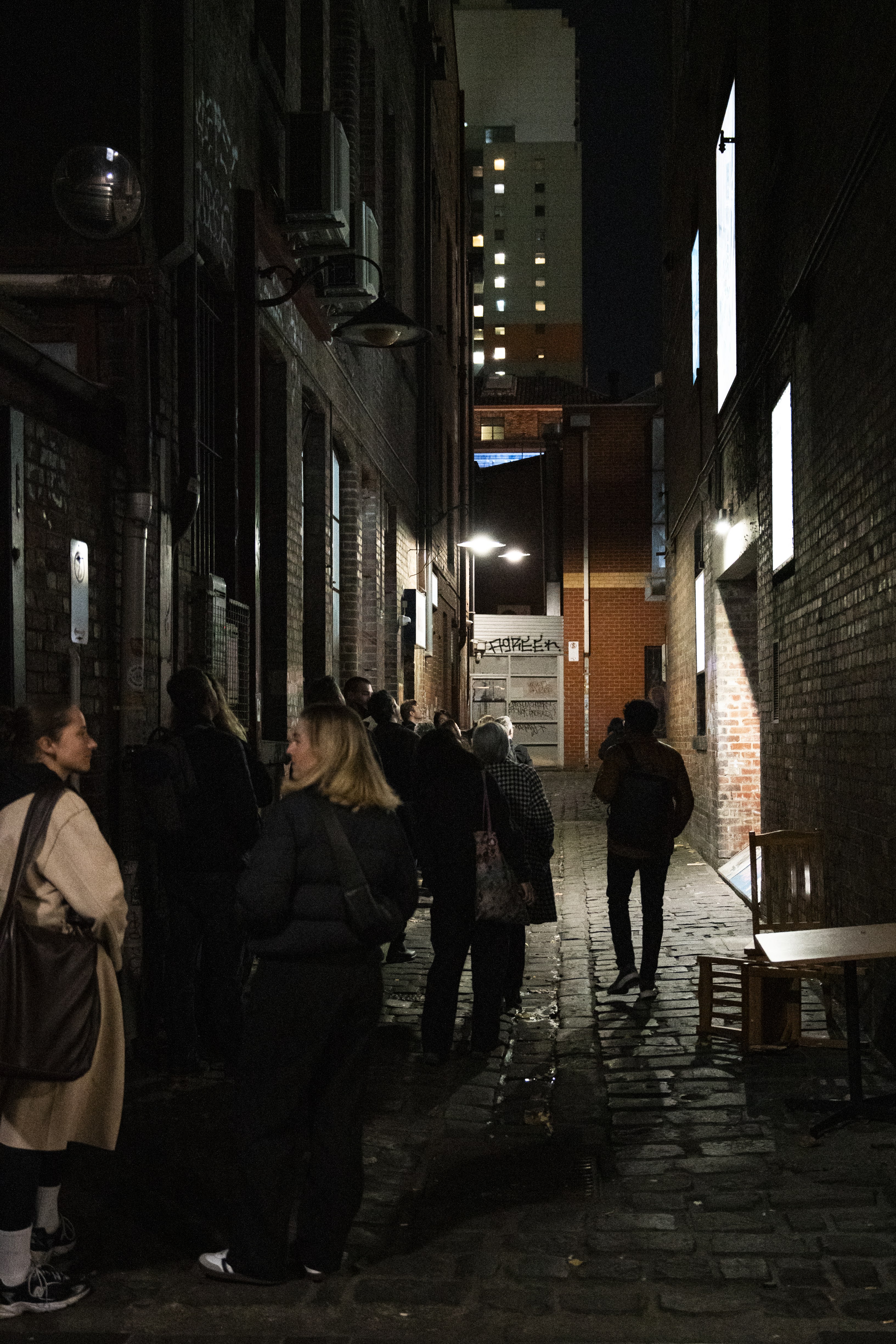
The door screams open and a vent of hot air condenses into a miniature cloud as it hits the night. She steps out, retaining a facade of dignified presence while customers still might see her. Warmth and light and jovial noise radiate from the aperture behind her. If the punters were paying attention they might notice the thud of the closing door joining the milieu of city night noises. With the sound, all the structure flees from her and she collapses onto a pile of milk crates like an old tarp.
A tired curse falls from her lips and hits the cobblestone pavement. It runs through the cracks with rivulets of unclean water that weeds drink as they fight to be the scant green in a sea of brown, nature fighting the meat and mead for space in the city.
A flicker and a spark leaps from lighter to cigarette tip and the burnt ember cools and nearly dies before she takes a drag.
The place isn’t made for her. Nor is it made for anyone else; back here all the carefully curated crenellations of the frontage’s folded facade falls away and she finds a space defined by absence and the swept path vectors of a bored traffic engineer.
In design meetings it’s an inconvenience, mere detritus space, carved out of yield ratios and organisational tetris and the tensions of who needs what to be accessible and where.
It’s a place designed for the habitation of representative rectangles. Bins and lorries and sharp corners and gutters and a series of assumptions about the most a thing can take up in the least amount of space.
“After all, nobody’s going to use it,” comes the refrain from design meetings and rushed teams calls of eight attendees with only three cameras turned on.
“It’s just access for the bin truck.”
The owner of the land hasn’t ever set foot on the dirt of the alleyway. The designers haven’t stepped out back since the building topped out. The traffic engineer never saw the final result. In all cogent, demonstrable ways, the space belongs more to this woman in this moment than it ever has the people who have defined its shape and character. In the howling thud of the city nightlife, the back of house is her place.
And what a place. Where once there were safety warnings on steel signs and whitewashed walls, now there is the joyful exuberance of graffiti tags and plastered posters. Tiny stickers with obscene slogans, or the boisterous hopefulness of civil disobedience, cries of “climate action now!” and “free palestine!” and “always was, always will be” Layer on top of one another. The story of the alleyway, written across time in cross-stitches of paint and plastic.
It has none of the keen deliberation of the main street frontage but more honesty, a palimpsest of words and thoughts and expressions hard won. The place has a shared authorship, as each temporary owner, each transient singular human, has written something, a scant etching on the next part of the canvas. It’s the ever-building story of a creative cabal of anonymity. The people and places here are defined by their lack of names. Their unfamiliarity with each other.
The end of her cigarette ash falls and dissolves into a trickle of water and runs down beneath the skip bins. Idly, she picks at one of the posters on the walls, her authorship of the place this evening an act of bored destruction. As she pulls, a lump of gummed paper tears away, and she drops it in the crate next to her. When next it rains the paper will become a semi-permanent piece of papier-mache, adhering to the milk crate as it is carted from alley to alley, not understanding the stories on the walls that surround it.
With a final drag, the cigarette and her break is finished. She sighs and she stands up and her form takes hold of her again. A careful smile reaffixes itself to her face, and she opens the door again. Energy, raucous laughter and the escape of heat into the night hides her tired sigh, and she steps back to her role with practiced professionalism.
The door swings shut, her brief ownership of the back of house ends, and the space waits for whoever is to write the next etchings of its story on the wall.
Thanks for reading. If you enjoyed, consider subscribing. you can find other things I’ve done over at my website, henryneilsen.com. If you have a few spare dollars, I’d appreciate a donation to my ko-fi. Otherwise, have a great day and I’ll see you next time.