J A Z Z, or Changing up your Creative Experiences
TL;Dr New Stuff Good
I’m about to write an article glamorising the idea of pushing yourself to explore new things. Meanwhile, the playlist that I’ve been typing away to since 2018 is playing through my budget-ass headphones. Hope you’re ready for me to make some very hypocritical statements!
Alright, let’s get started.
I’m talking about art, and I’m talking about the way we experience art. I’m no art historian or scholar or anything like that, but the… Manifesto is a strong word… of these sets of articles is to detail the kinds of things that art makes me think.
A few weeks ago, I was out at a standard night of cheerful company and silly questions for pub trivia (We did alright, but no free beer was forthcoming, mainly due to a garbage second round which I will take no blame for). That’s unimportant. What’s important is that as the evening drew to a close, a young man approached the table. He said:
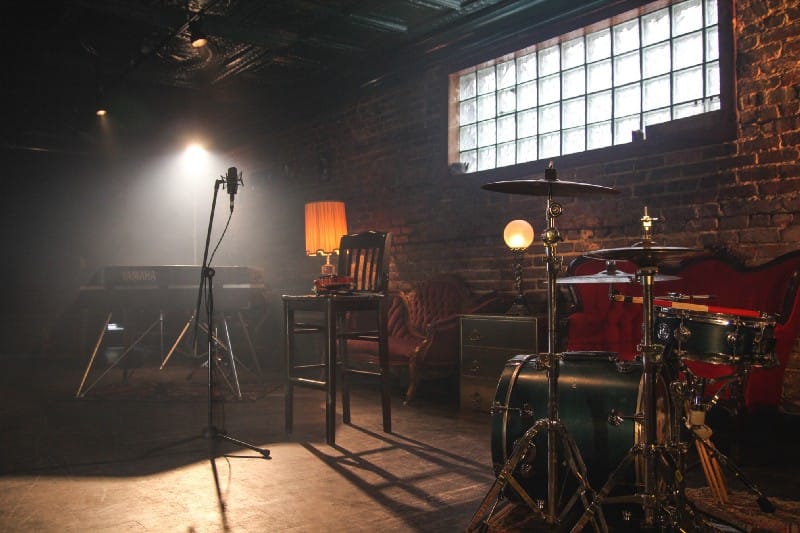
“Hey guys, just so you know, in the band room after this there’s a jazz band playing! They’re called *name redacted because I’ve forgotten it*. It’s a three piece, and a guy writes chords on a whiteboard while the musicians improvise over it.”
Well.
This I had to see.
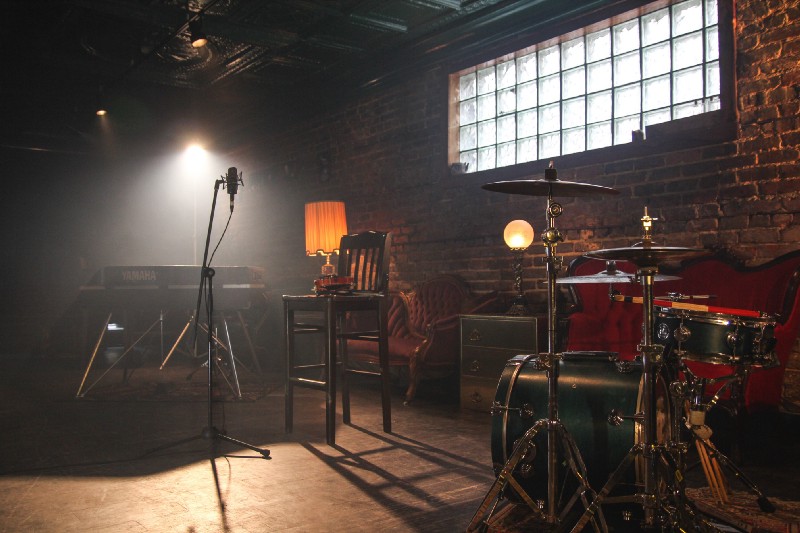
Ephemera: Everything’s already been done, but you may not have heard it.
All too often I’ve heard the phrase “there’s nothing new under the sun” and I suppose that’s true, but I walked out of that pub trivia and heard a bunch of extremely talented musicians playing some genuinely fantastic tunes. Whether I’d heard it specifically before wasn’t the point — the fact that it had happened in front of me felt special. If you were to ask me to hum any of it now, I couldn’t. If you were to ask them to play the exact thing they’d played that night, they couldn’t. As a matter of fact, myself and the dozen or so other people in that room are the only people in the world that would ever see or experience that performance of that piece of music.
That’s incredible, right? I walked out stunned and wanting more (the set ended about twenty minutes after I got in). Already, the salient features of the experiences were melting from me. By the time I got out of the car at home and walked through the door, all that remained of the entire experience was a warm feeling of seeing something “good”, and the sticky idea that I needed to put some of this feeling into words.
It was this fleeting, ephemeral piece of art that managed to transport me in a way that most music doesn’t any more (there are exceptions, of course). After a bit of thinking, and talking it out, I realised that this is, to a large degree, how musical experience used to be.
Think about it. before recorded music, every time you saw a performance it would be fresh and new and even if it was a folk song that was passed down, the nuance of that song would be different from performer to performer. Your parents might sing it to you, only for them to forget the words and so someone from out of town would play another mutation of the lyrics. An example of this is “House of the Rising Sun” which is a folk song that was spun around for seemingly generations before it got recorded by The Animals in 1964 and this version became the de facto “original” iteration of the tune.
And it’s in this “originalness” where we find the very large contingent of artistic expression that represents the opposite of the ephemeral experience.
Reification and the objectification of art.
I am not the guy to go into serious detail about reification and the way that it works — I first heard about the concept from an excellent Star Wars video by Tantacrul and it was like a bomb going off in my brain. Suddenly a whole heap of questions and confusion I had about franchise film-making and the endless ability for once-great ideas to be commodified for profit slid into place.
Put simply (and seriously at the very least watch the Star Wars video, it’s awesome), reification is the idea that as we become more familiar with a work, its ability to convey meaning through context becomes lost, and it becomes a solid object in our mind that has meaning in and of itself, rather than the viewer being allowed to make their own mind up from the experience. Essentially you become so familiar with a thing that a diversion or change from that thing sounds strange to your ears. In the case of House of the Rising Sun, The Animals version is (likely) the one you’re most familiar with. After all, who doesn’t like arpeggiated chords and Vox Continental keyboard tones. And the haircuts.
Now I want you to stop and think. When you listen to this song, or you hear it come onto the radio (lol, radio — yeah mate, just pop down on to 1996 and listen to it on your radio) what do you actually feel?
https://www.youtube.com/watch?v=4-43lLKaqBQ
Keep in mind — this is the tragic story of a life of people whose lives have been torn apart by gambling and prostitution.
Was your first thought about that? Or was it “boy howdy, do I love this song!”?
It’s fine if it is — that’s my response too when I listen to this song as well. I have to really sit and engage with it these days to find what my true emotional response to the song is. Truth be told, I don’t even know if the deep sense of longing and hopelessness I get from it is true either, because I’ve known for so long that that’s what the song is about that I’m not sure if that’s my own response, or the projected response that I’ve been informed to have.
And I think it’s okay that I don’t know. As much as it’s a touchstone of rock and blues music (check out the Muse version for the first version I heard that really blew my socks off by the way), I think it’s worth being able to recognise when a piece of art is reified in our own brains. It’s no longer an artistic journey we take for the first time, it’s a photograph that we look back on and remember fondly for the artistic journey we once took.
I do it all the time. I reread Jurassic Park at least once a year, and I can still recite the first chapter of Hitch-Hiker’s Guide to the Galaxy. I think this kind of melding of art into an object is useful for identifying the kind of work that we think we might enjoy in the future.
There’s a downside though. (this would be the part where if this were a video I’d put over-the-top DUN DUN DUNNNN music because that’s a musical object that signifies oh god I’m doing it aren’t I?)
Objects all the way down
Humans, when they grow up, are generally uncreative creatures that run on habit, expectations, superstition, and the idea that everything in the world was the best when they were fourteen. And if we build a world where reified objects from our past are the main way that we interact with the present, I think it’s really going to stunt our ability to grow artistically as a society.
For you clever clogs who already go to indie movies and check out small bands and don’t listen to commercial radio (oh heck there I go again with the radio), I’m kind of talking to you as well, but it’s mainly for people who know they’ve fallen into a rut. Not to take away anything from Kate Bush and Metallica, but was there no way of evoking an 80s vibe without literally pulling music from it in Stranger Things? Elton John, PNAU and Dua Lipa cashed in on a milquetoast remix of “Cold Heart” and the TikTok kids seem to think that Fleetwood Mac is the most amazing band that could ever exist.
I’m not trying to take that away from people. And I’m not complaining that the “back in my day” crowd seems to be at the forefront of the cultural zeitgeist either. I’m really not. But there is so much art out there now. Never before has a collection of art been so available to so many at once, and yet we keep returning to these objects as a matter of course.
My worry isn’t that people will continue to enjoy the art of the past, and it definitely isn’t that I think art from the past is bad. I just worry about it becoming all that there is. A world where everything is remixes of previous tunes, or just the music itself. A collection of objects that as a society we decide are “good” and are thus the only things worthy of our attention. In this world, new creative experiences are elbowed out financially and critically in favour of the coercive power of reified experience.
(I’m listening to Mace Spray for about the fifteenth time this week while writing this)
Each time we listen to a nostalgic track, or watch a 45th Avengers movie (oh, I’m coming for you too, Avengers — that’s gonna be a hell of an essay), or give Stephen King an entire shelf at the bookstore when other horror authors can barely get two copies in, we’re stunting our own experience.
The unbridled joy in the unknown
As I said earlier, everything’s been said before. The value of music and art and literature and theatre isn’t to hear something that’s new to the world, but it would be good to see something that’s new to you. This article has been about music, so here’s my advice to anyone looking for a new experience with music.
When your friend invites you to a concert, just go (if you can afford it). Don’t look up their Spotify, don’t check them out beforehand, and definitely don’t try to learn their songs so you can sing along.
This is one of the best ways to be able to enjoy art, and it’s a total rejection of the reification and objectification of a piece. The reason I so thoroughly enjoyed the experimental jazz band I saw (aside from the fact that they were all phenomenal musicians) was that I had zero expectations about it. My mind didn’t walk in made up. I had to do that on the night.
Sure, it could have gone the other way, and I’d have spent two weeks wondering why I went and saw a band that didn’t know which end of their instruments to hold, but it still would have been a new experience, not a rehashing of an old one. In this case, there’s no way I could have known the music I was seeing. There’s no way I could have googled their names and listened to their top five, and this is what made the experience so great.
When you go in with an idea of what it is you’re going to see, I think it kick-starts that process of objectification, and it does it in such a way that can blind us to other positive or negative elements of the work. When you go in blind then you’re completely freed of that idea and expectation (to a point. You still expect a picture when you go look at paintings). The other thing it allows you to do is experience things in their context.
In the event where you’re reliving a piece of music from the 1980s, or you’re watching a film from the 60s, or looking at a painting from the 1800s, there are cultural relevancies you miss because bro, you weren’t there. This is a big deal, because elements of satirisation of current affairs, the general feeling of the zeitgeist, and other contemporaneous elements disappear while the art stays the same. By only consuming art made in another time, which you already have a preconceived notion of, you’re denying yourself the experience of thinking about your own place in the world. Instead, you hearken back to a response to a world that no longer exists, to an object that has become itself a touchstone, and now exists in a void, or worse a world it wasn’t made for.
So take time to see new art. Don’t watch the trailers. Don’t read the reviews beforehand. Don’t see that franchise. Try something new, and allow yourself to hear it for the first time. Let the art be the whiteboard onto which you write the chords of your own life.
Right, article done. I’m gonna go listen to Queens of the Stone Age.
Thanks for reading. If you liked it, please give a clap or a follow. If you didn’t like it, reply with an angry message and I promise I’ll change. I post weekly on Wednesdays about art and culture and my experiences with it.
I don’t get paid to write this — it’s a hobby and I enjoy it and hope you do too. However, if you would like to show your support beyond simply following, you can support me on Ko-Fi. I’ve just launched it, but I am aiming to give early article access to supporters and other perks soon.